A pure-blood track weapon, forged in extremes
Apollo Automobil has revealed the full production specification of the Apollo EVO, a track-only hypercar that exists far beyond the usual boundaries of sanity, subtlety, or compromise. Limited to just ten examples worldwide and priced at around €3 million, the EVO represents the most radical expression yet from the company that traces its lineage back to the fearsome Gumpert Apollo of the 2000s. Since relaunching in 2016, Apollo Automobil has produced only ten customer cars, all of them the ferocious V12-powered Intensa Emozione. The EVO follows the same philosophy of scarcity and excess, but pushes the concept further still. This is not a road car with track aspirations; it is a no-excuses circuit weapon designed to deliver the most visceral, mechanical driving experience Apollo can engineer in the modern era. First customer deliveries are scheduled for the first half of 2026, with production already underway.


The 6.3-litre V12
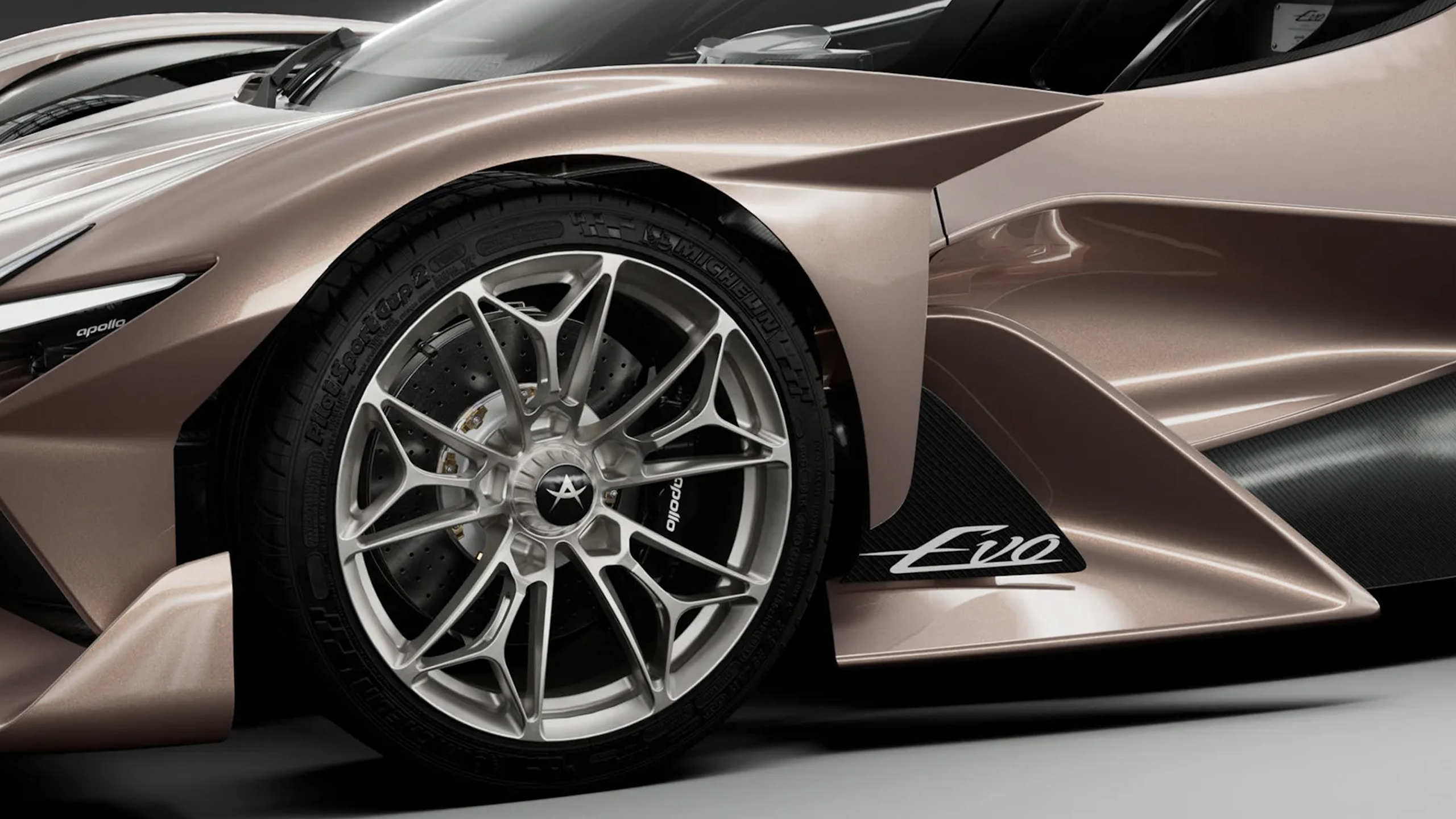
At the heart of the Apollo EVO lies a naturally aspirated 6.3-litre V12, sourced from Ferrari and heavily reworked for Apollo’s purposes. In this final specification, output rises to 800 bhp with 765 Nm of torque, surpassing both the Ferrari F12 donor engine and the already outrageous Intensa Emozione. Power is sent exclusively to the rear wheels through a six-speed sequential gearbox operated via a pneumatic paddle-shift system. With a targeted kerb weight of just 1,300 kg, lighter than many compact crossovers, the numbers are predictably brutal. Apollo claims a 0–62 mph sprint of just 2.7 seconds and a top speed of 208 mph. But outright speed is only part of the story. The EVO is engineered to generate over 1,350 kg of downforce, with a hydraulically operated rear wing capable of adjusting its angle of attack in under a second. The aero load is so extreme that Apollo stops just short of claiming the car can drive upside down. Grip comes courtesy of Michelin Pilot Sport Cup 2 tyres wrapped around 20-inch front and 21-inch rear forged aluminium wheels, with optional slick-optimised wheels available. Carbon-ceramic brakes are standard, though buyers can specify racing steel brakes as part of a dedicated performance package.
Skeletonised design, inside and out
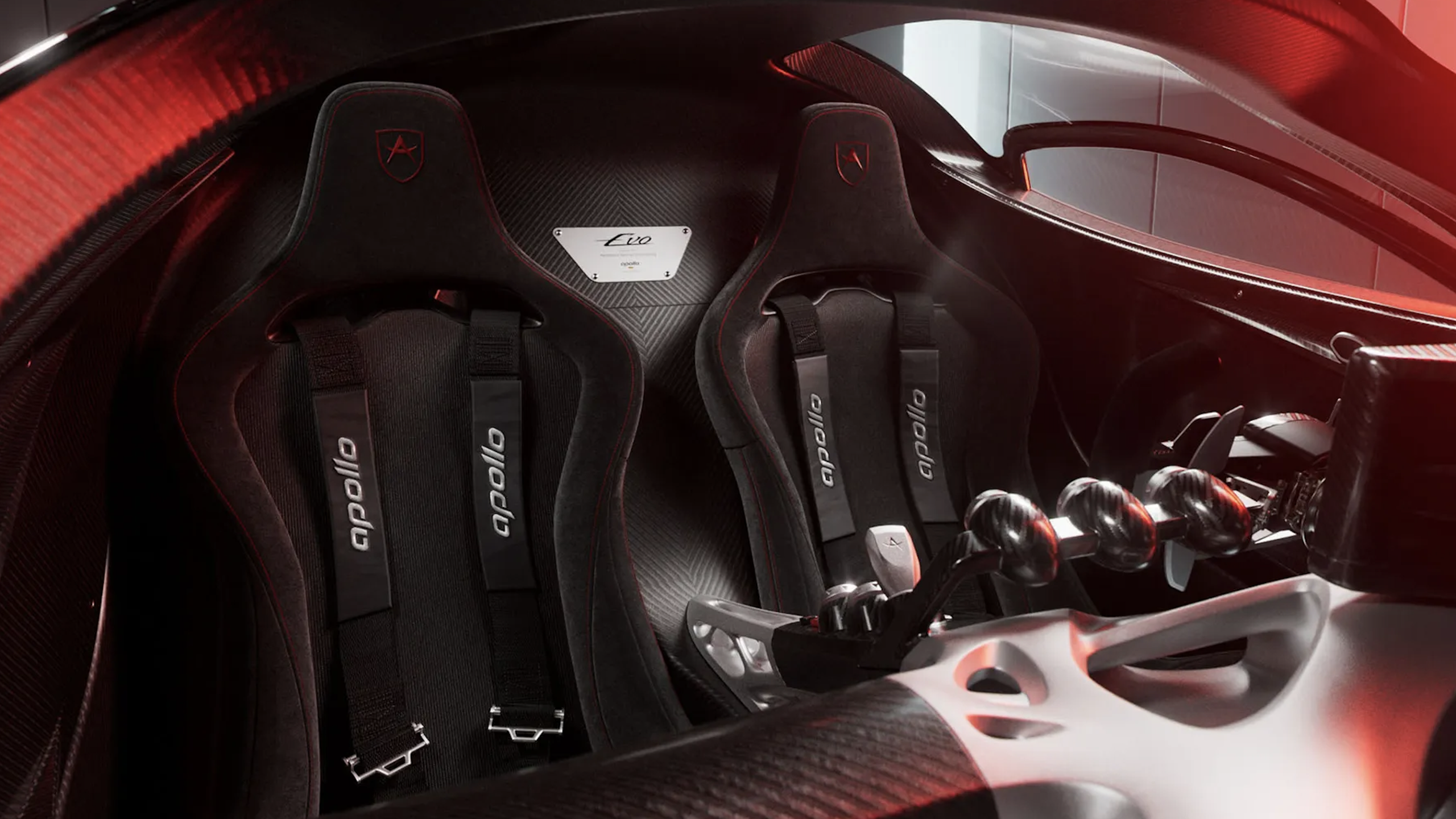
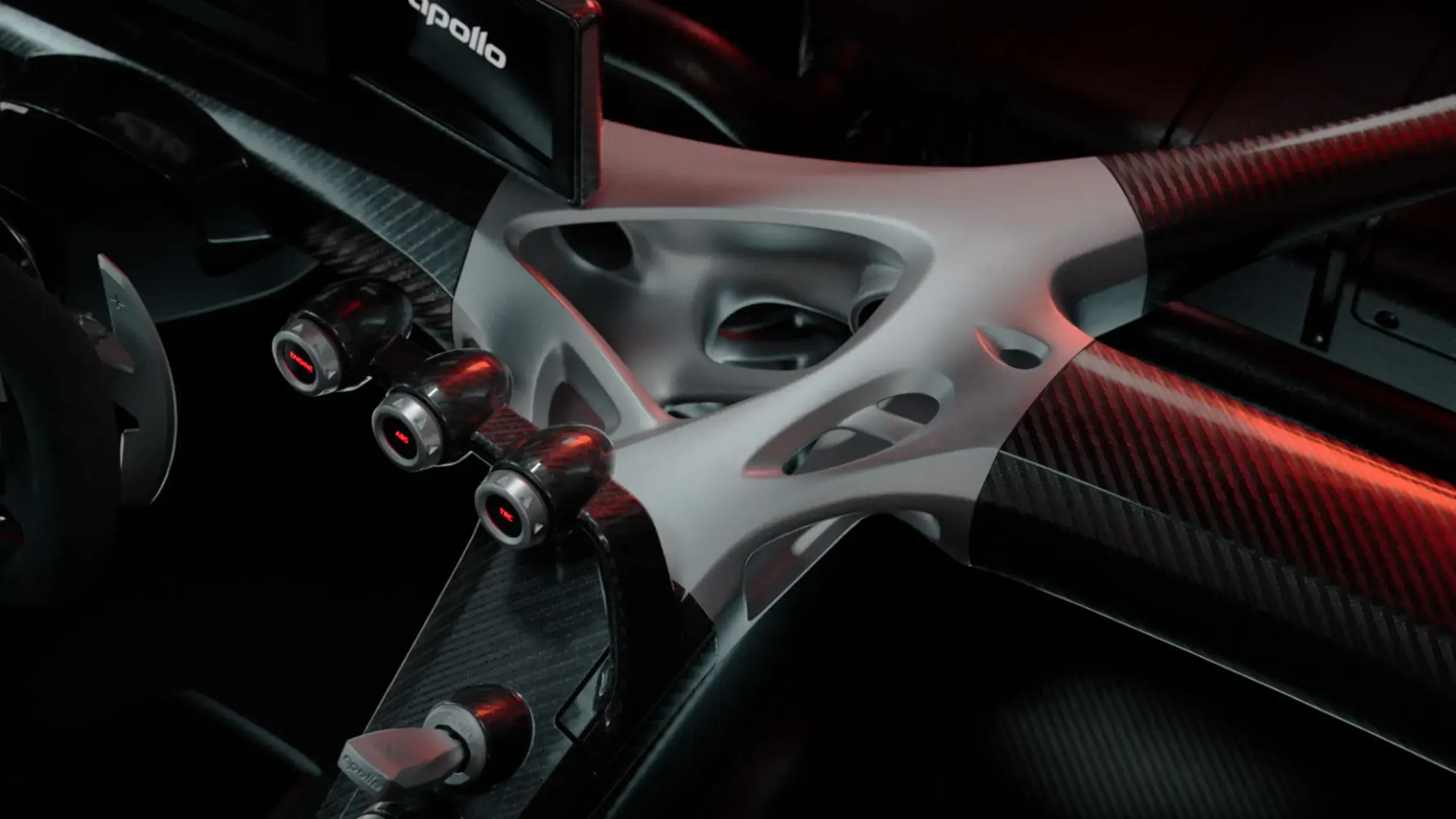
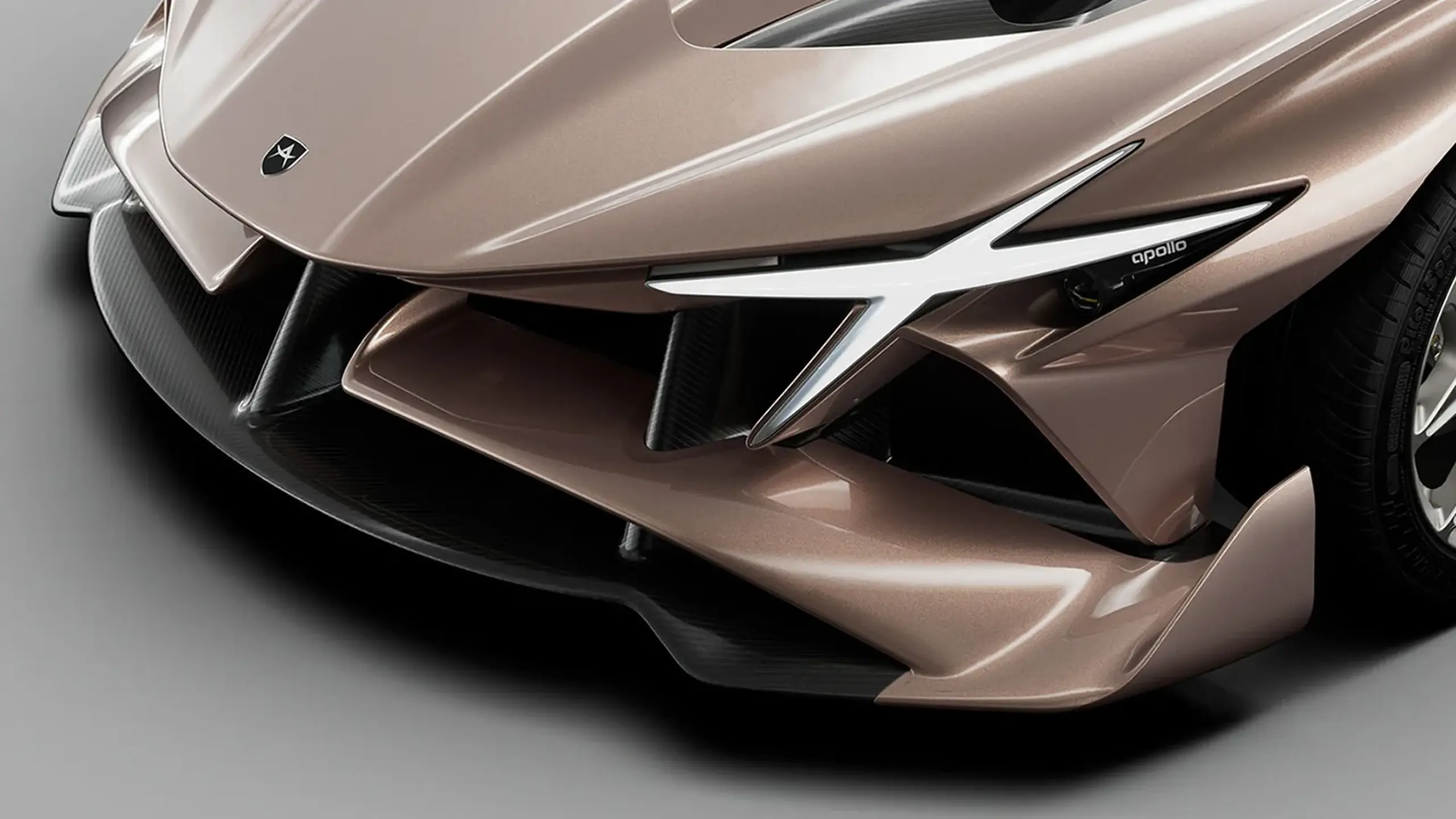
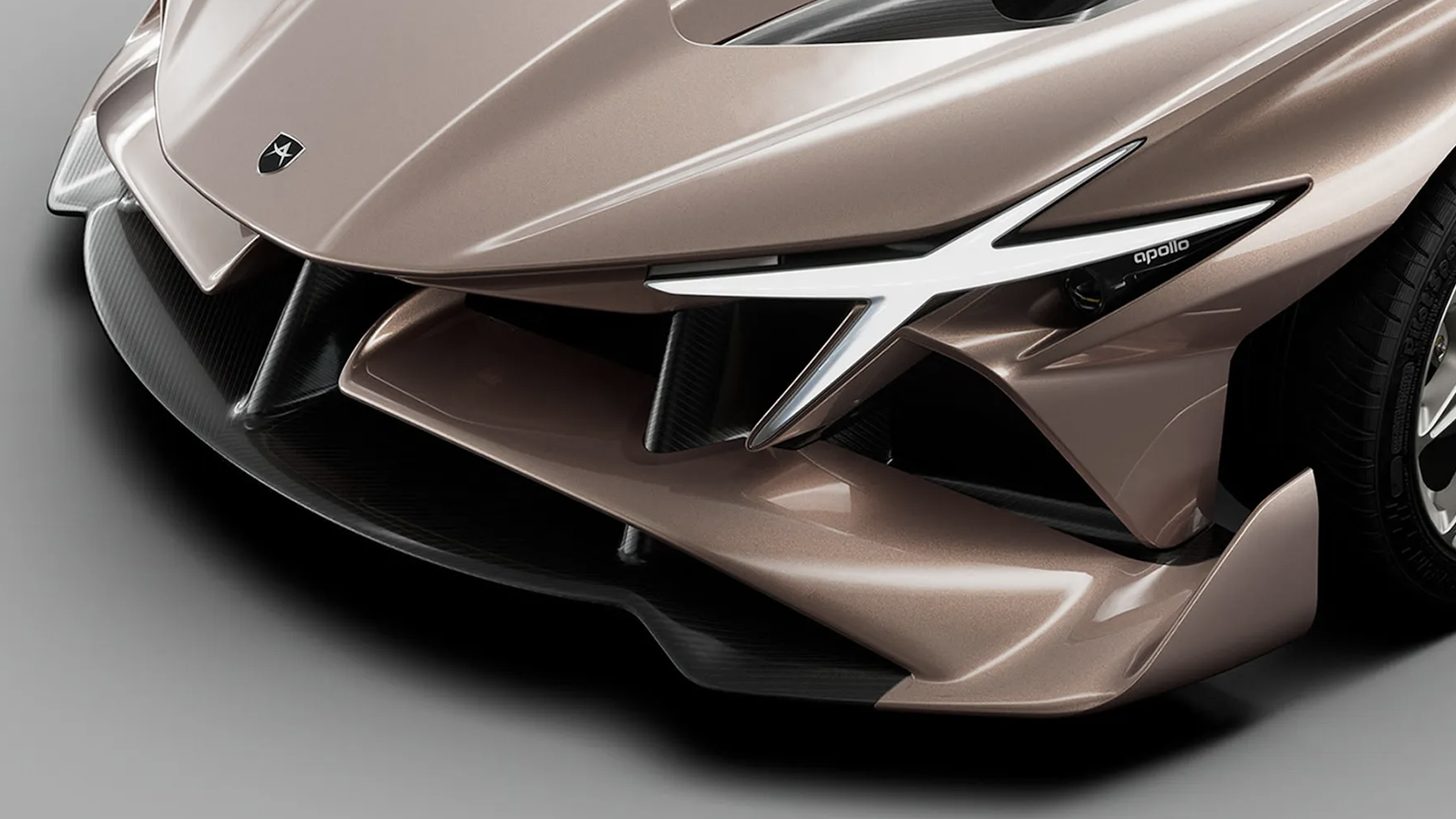
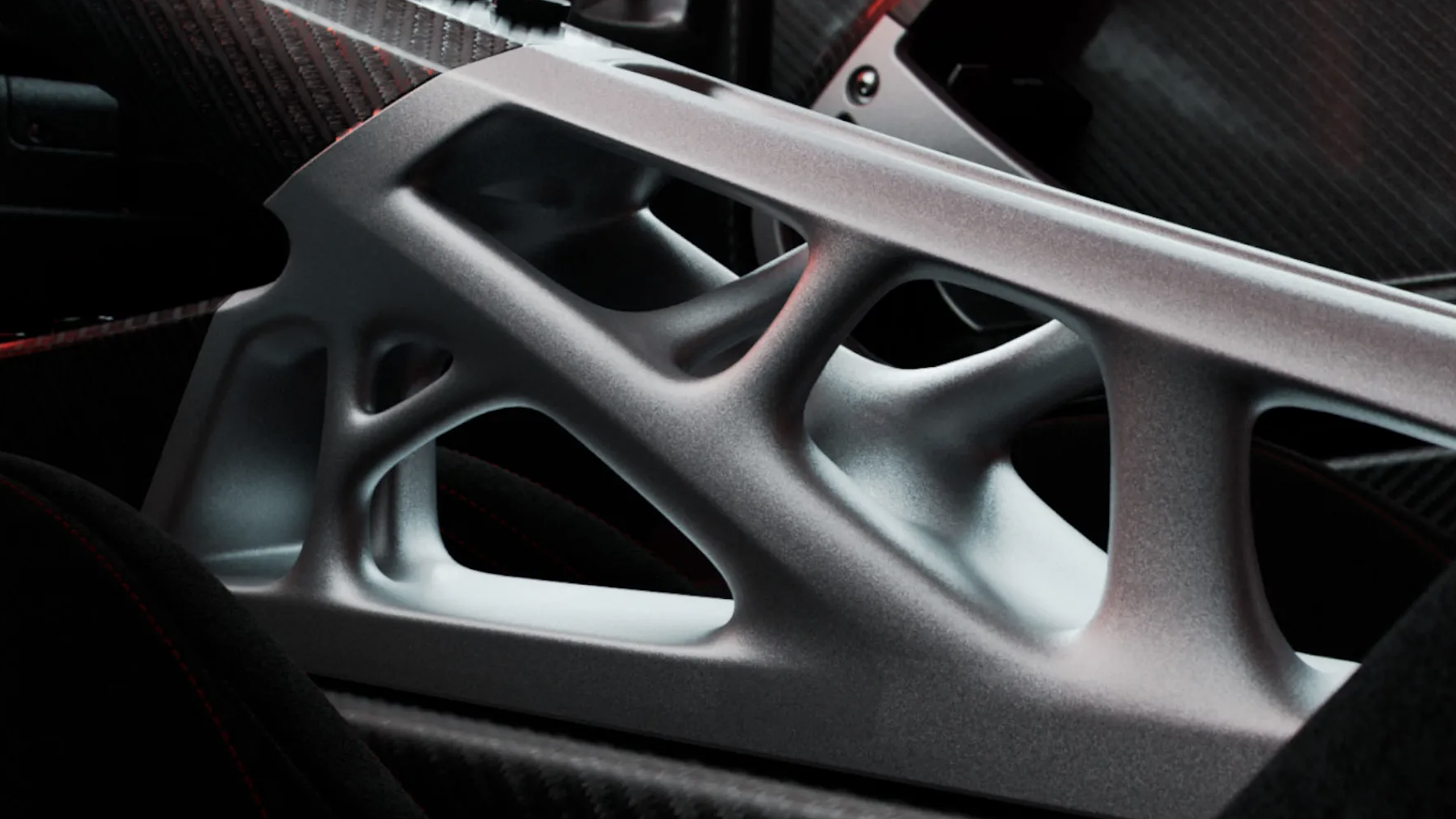
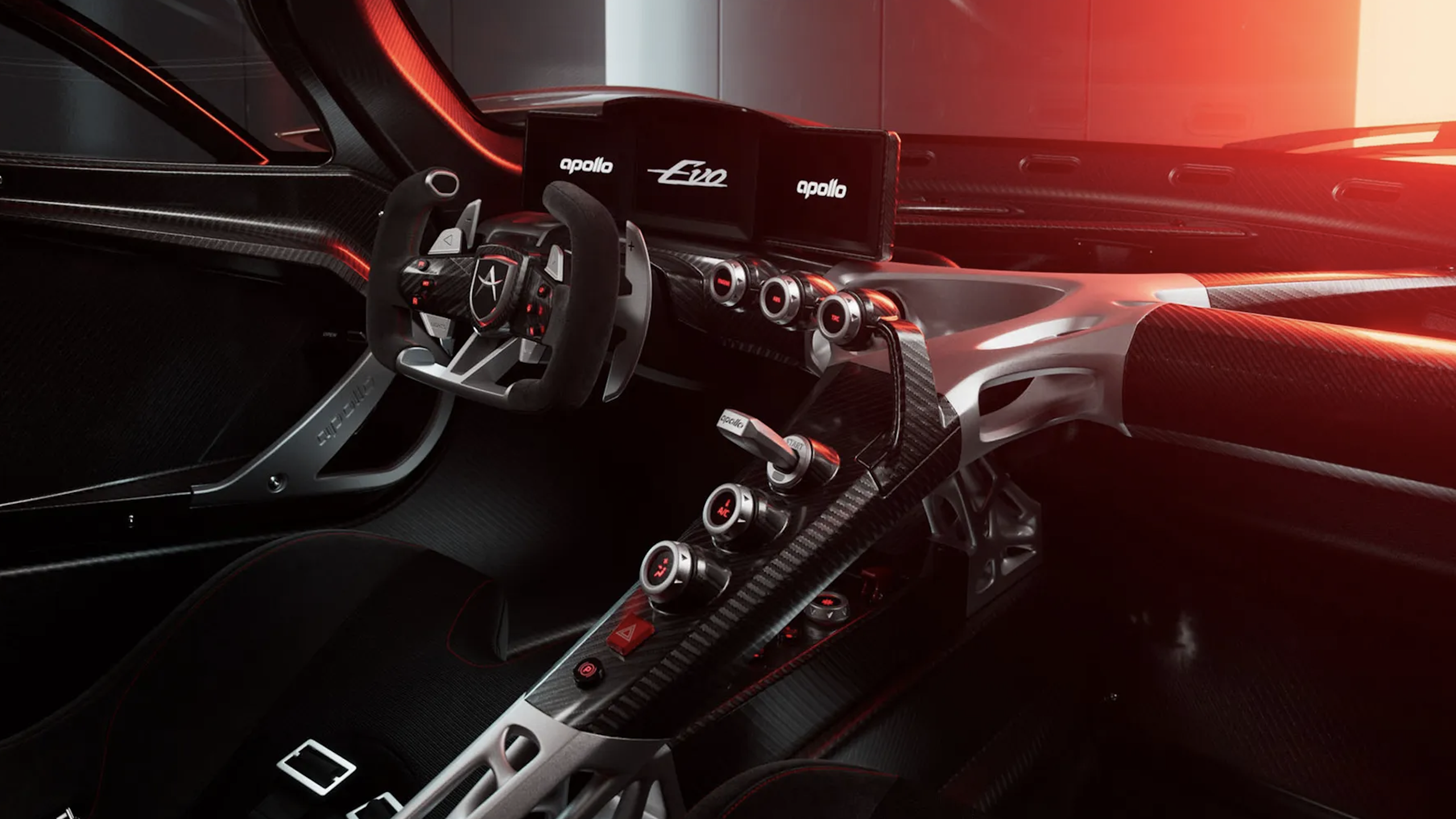
Visually, the EVO looks less like a conventional car and more like a mechanical organism mid-mutation. Winglets, vents, exposed structures and aggressive aero surfaces dominate the exterior, giving the impression of a Decepticon frozen halfway through transformation. This “skeletonised” philosophy is not mere styling theatre, it extends deep into the car’s structure and cabin. The all-new carbon-fibre monocoque weighs just 165 kg, making it 10 per cent lighter and 15 per cent stiffer than the Intensa Emozione’s chassis. Inside, the concept of reduction reaches its logical extreme. Load-bearing structures remain fully visible, with carbon fibre and aluminium left exposed throughout. Anything not essential to driving has been removed. The cockpit features fixed racing bucket seats with full harnesses, a sliding pedal box, a yoke-style steering wheel, and racecar-grade switchgear. Driving-critical controls are arranged horizontally on an exposed carbon-fibre beam, reinforcing the EVO’s uncompromising focus. This is not a cabin designed for comfort or distraction, it exists solely to connect driver, machine, and physics with as little filtration as possible.
Ten Cars, ten personal statements
Despite its brutal minimalism, no two Apollo EVOs will be alike. Through the Apollo Forge programme, the brand’s in-house customisation division, each of the ten cars will be tailored to its owner’s preferences in materials, finishes, and detailing. Even within such an extreme framework, Apollo insists on individuality as a core value. Production will take place in two batches of five cars, with only a handful still available at the time of announcement. At €3 million before taxes, the EVO sits firmly in the upper stratosphere of hypercar pricing, but then, few cars offer a naturally aspirated V12, over a ton of downforce, two full Gs of lateral grip, and an interior stripped to its structural bones. The Apollo EVO is not designed to broaden appeal or chase trends. It is the final, feral expression of a disappearing breed: loud, light, unapologetically analogue, and engineered without regard for anything other than ultimate track performance. In an era increasingly defined by electrification and restraint, Apollo has chosen to go out swinging, at 8,000 rpm.